
|
The original ancestral color of the horse was bay dun. All
of the other colors found in the equine species are the result of subsequent mutations over
thousands of years. Keep in mind that "mutation", when referring to
color genetics, does not in this sense mean
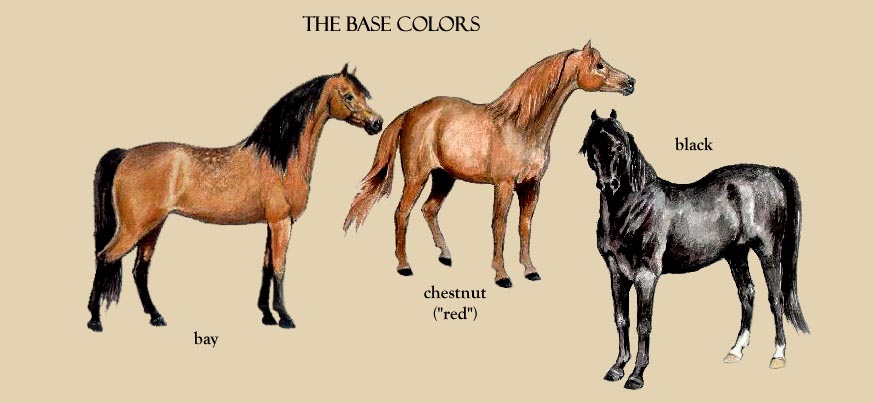
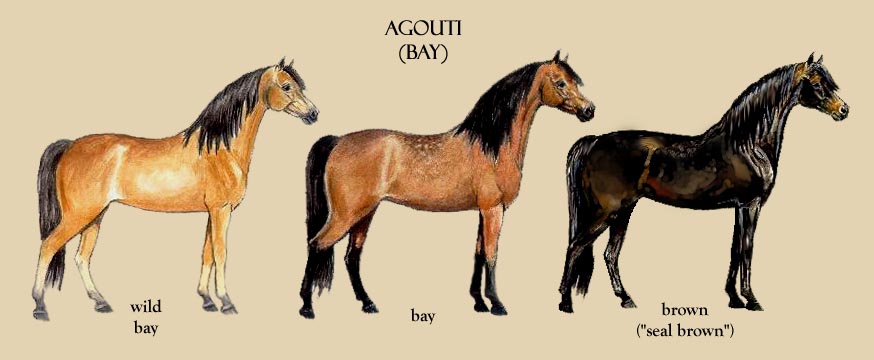
anything negative, but simply a change from the original genotype. There is artwork depicting a medium shade of each color on each page of our Color Gallery. Be aware that the possible shades in each color may vary (lighter or darker) than what you see in the artwork; the photos used will illustrate those variations in shade. Also, keep in mind that the bay base horse will always be on the left, the chestnut based horse in the middle, and the black based horse on the right. This will help you remember what base color is "underneath" the various dilution genes and modifiers shown on this website. Click on any picture to enlarge
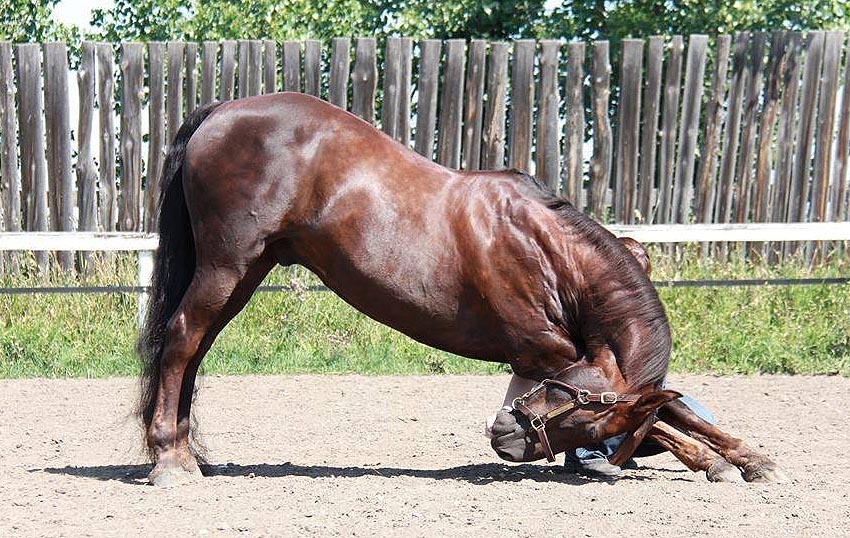 COLD CREEK CASH (Final Command x Arduns Victoria ) 1997 chestnut gelding owned by Caylyn Walker, Blitzen Morgans. "Riley" is certainly multi-talented- he had a successful show career (including two World Championships and 4 Grand National Championships) in disciplines ranging from cattle work to dressage, hunter and western pleasure, and has also been trick trained by Caylyn.  GAB CREEK TRAVELER (Funquest Erick x Gab Creek Gay Mashanta), 2004 chestnut gelding owned by Bill and Susan Visi. Pictured as a two year old. Photo by Laura Behning. 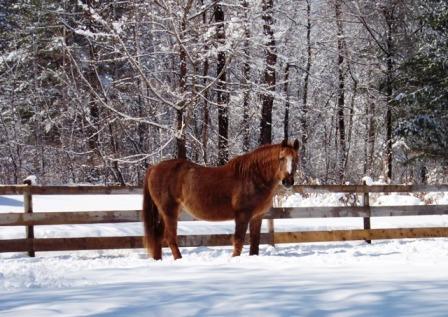 The late ANDA'S BALLERINA (O-At-Ka Carl Marshal x Princess Pierette) 1969 chestnut mare pictured at age 36. This grand old mare was a lifetime friend and partner for her owner Sue Colby of Macushla Morgans in NH. She competed in Hunt Seat, Western and Carriage Driving, did extensive trail riding, parades and weddings. She also produced three foals: the bay gelding Macushla Squire Dan (by Medomak Cavalier) who still competes, including over fences, with his young rider; the chestnut mare Macushla Cashmere (by Serenity March Time) who was Sue's Combined Driving horse; and the bay mare Macushla Brenna (by Medomak Sea Splendor), also owned by Sue. 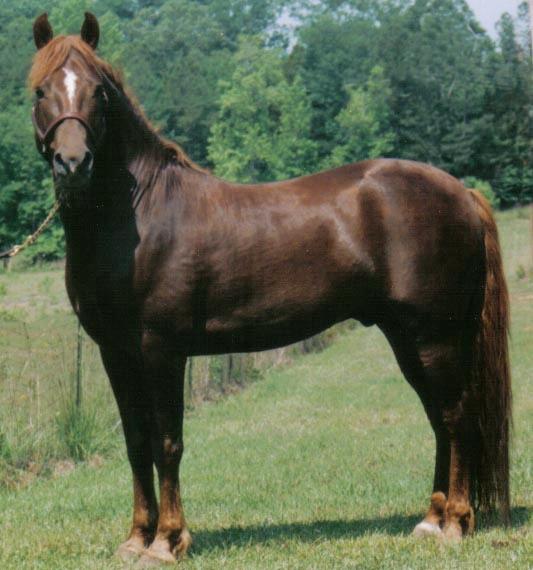 SCATTERED OAKS BOLDVENTUR (Venturous Colonel x New Heritage Laura Knight) is a full Lippitt chestnut gelding, foaled in 2000, and owned by Lisa Algarin, Claywood Farm, SC. 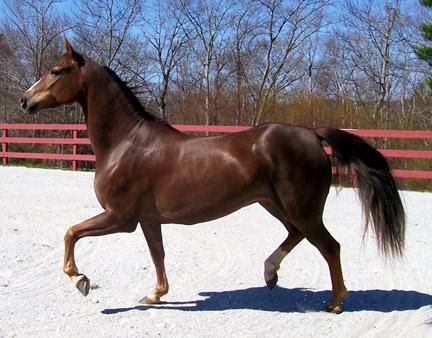 CBMF RUBY (GLB Bell Pepper x Cy Don's Libby), 2000 chestnut mare owned by Paula Reny of ME. 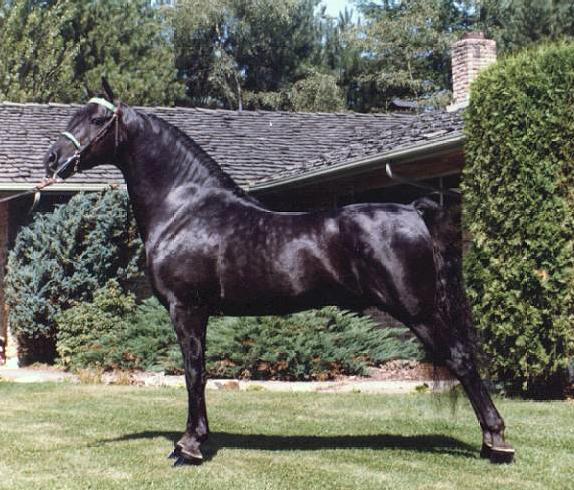 MERWIN ALL A BREEZE (Mr. Breezy Cobra x Merwin's Adonna), 1976 black chestnut stallion. This horse shows the darkest shade of chestnut- so dark it could be mistaken for black. A close examination of the hair around the fetlocks would reveal a few reddish or silver hairs, a clue that this is not a black horse. All chestnut foals are born some shade of red, and it is only after they shed the foal coat that their true shade of chestnut begins to become apparent. Photo courtesy of Sandra Nichols. 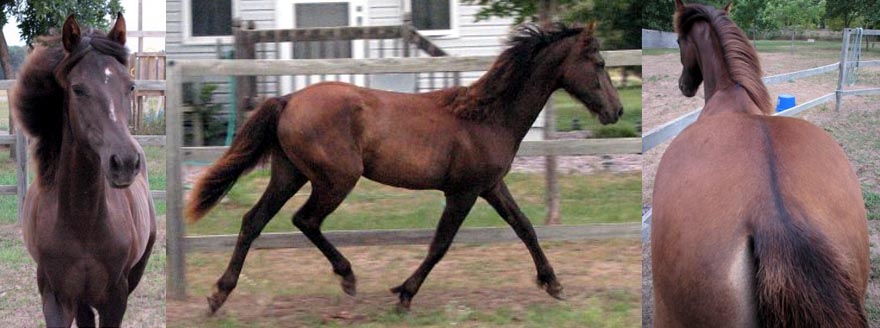 FIRE MYSTIC PRAIRIE DOLL (Little Red Diamond Reo x Old Bay Lippitt Trophy), 2007 chestnut mare, pictured as a yearling. Any color of horse can have a dorsal stripe, as seen here, but that does not mean they are duns. Dun is a dominant gene, so duns must have at least one dun parent, which this mare does not have. Recent discoveries have found that dun-like markings on non dun horses can be caused by a gene called nd1 (non dun 1), which causes primitive markings. Some chestnuts have a darker mane and tail than their body, as seen here. Photos courtesy of Amy Edmundson. 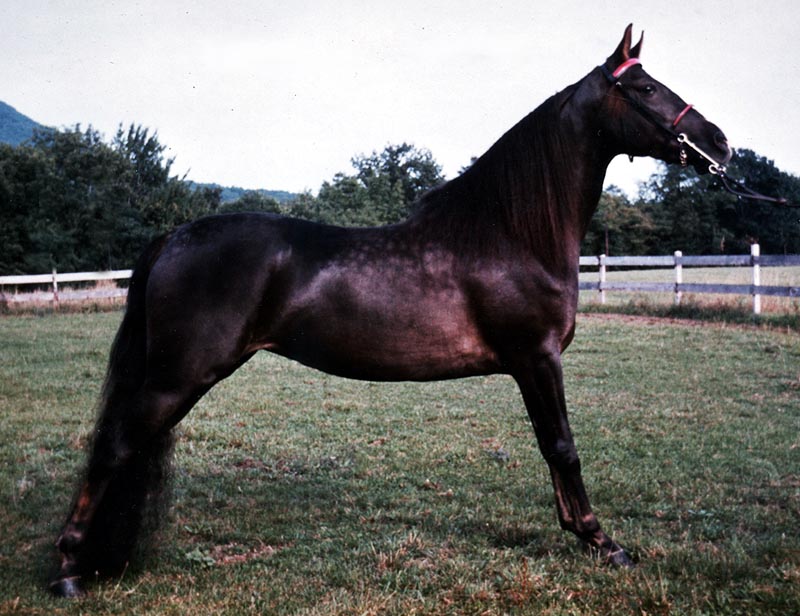 TOPFIELDS SAMANTHA (Topfield's Shamrock x Miller's Debutante), 1971 dark chestnut mare. Samantha is a good example of a dark chestnut that might be mistaken for a dark bay. The cream and red colored hair mixed in on her fetlocks and cannons tells the tale, however. She was a 3/4 sister to another very strikingly colored dark chestnut mare, Topfield's Janet, who can be seen on this page. Photo courtesy of Mary Ann Schaefer. 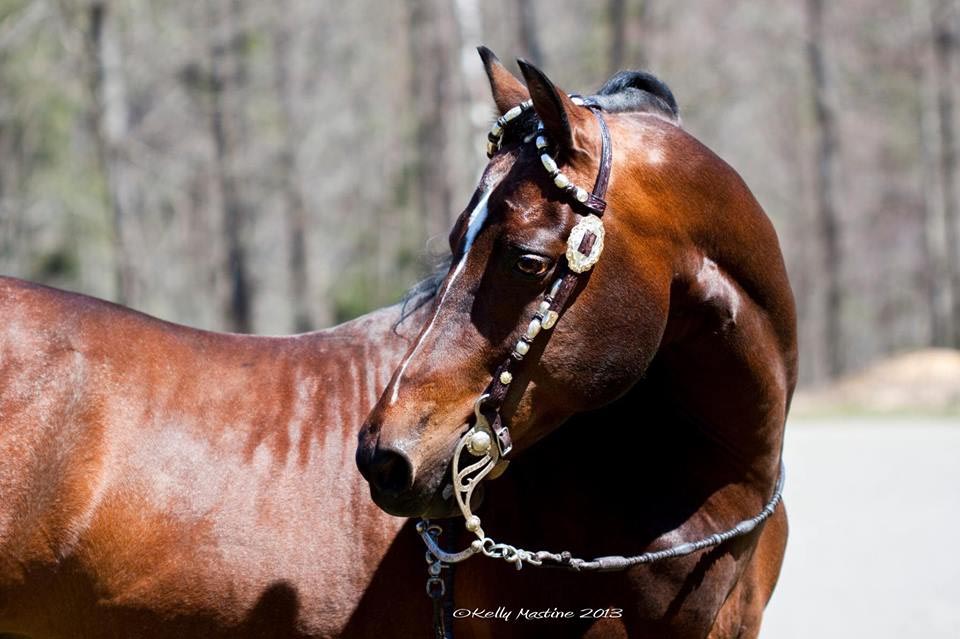
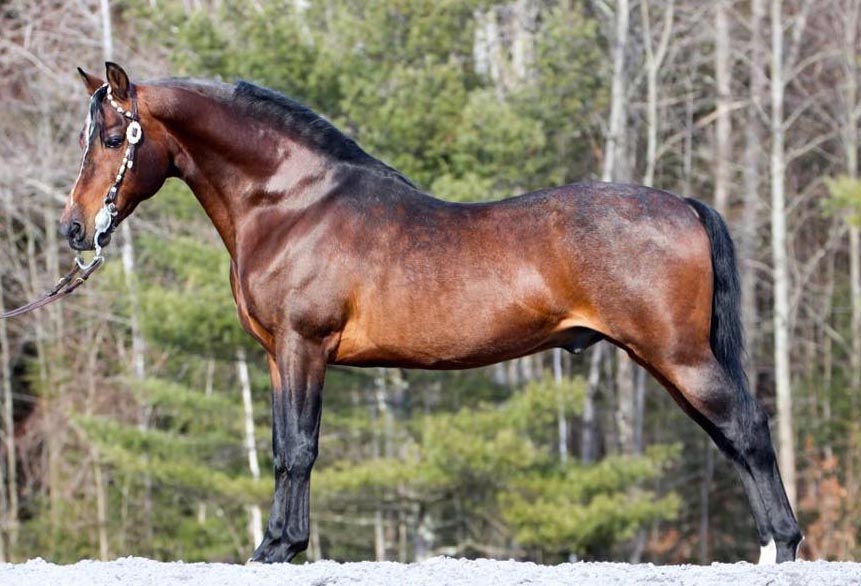 TREBLE'S DOUBLE EXPOSURE GCH (Mtn Laurel Maximilian x Treble's Theme Song) 1997 bay stallion owned and photographed by Kelly Mastine. 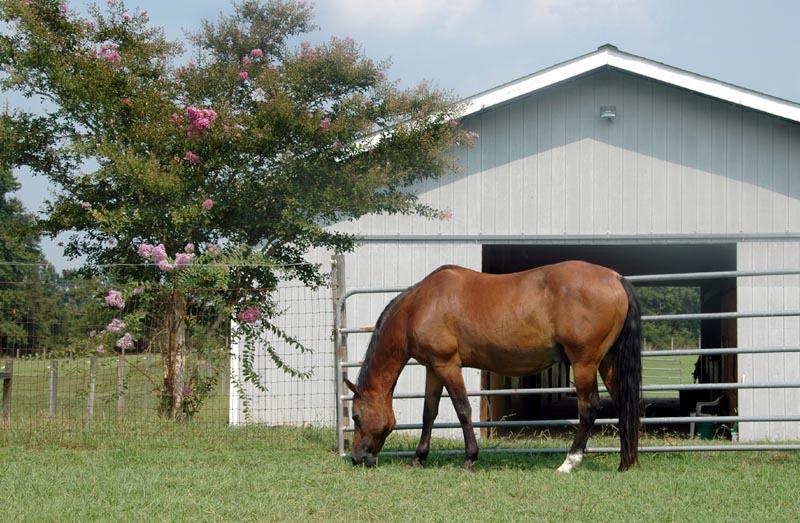
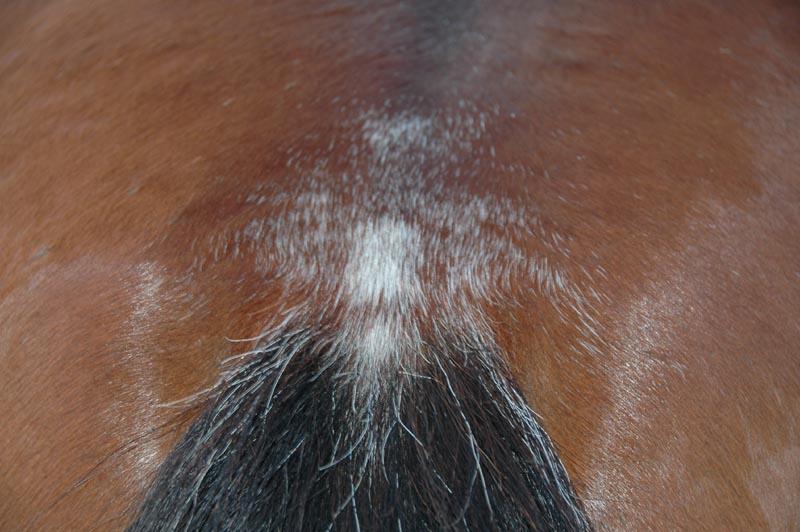
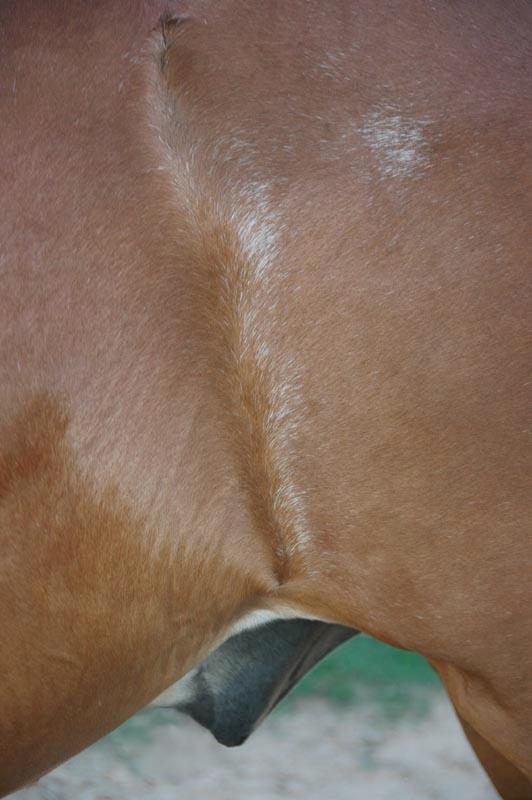 PATENTED (Big Bend Doc Davis x Reminiscing), 1990 bay gelding owned by Laura Behning. This is the classic light red-gold shade of bay. Pat also has a "coon tail" (banded white hairs at the tail head) and flank roaning associated with the rabicano white pattern, although he is not as extensively marked as most rabicanos. 
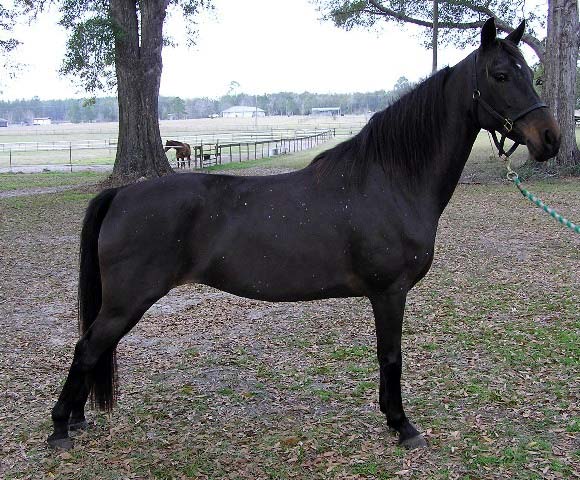 STORMSWEPT CRICKET (Antietam On Command x Bowood Elusiv Dream), 1997 dark bay mare. Yes, that's the same horse in both pictures! Cricket illustrates the range of shade possible on a single horse within the bay spectrum. This range can vary over different seasons, at various points in the horse's life, or due to the effects of different feeds. The second photo also shows Cricket's Birdcatcher spots, which come and go and are sometimes more or less numerous. Photos courtesy of Cricket's owner, Mary Ann Schaefer. 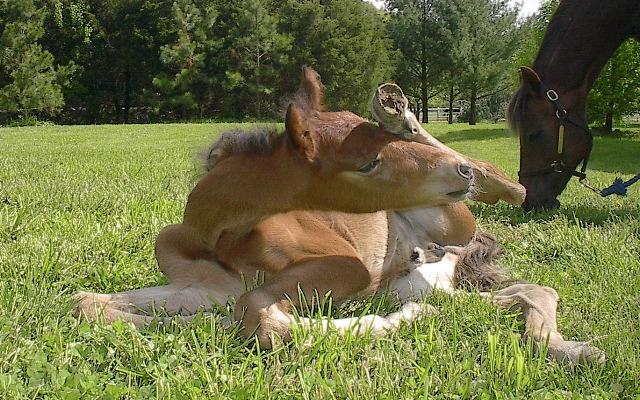
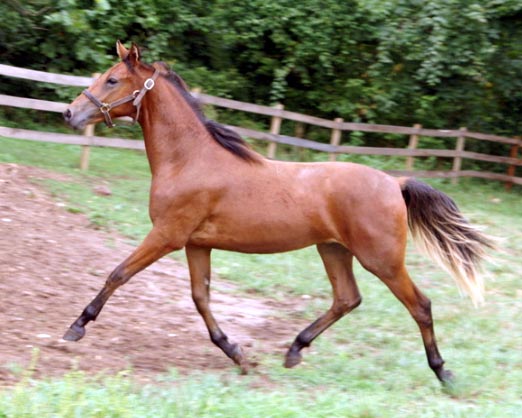 WINDEN MY WINGS (Shanghai X Essex Aria), 2005 bay colt owned by Jeanine Key. "Wings" shows that not all bay foals have a starkly black mane and tail; his is a mix of gray, black and brown hairs and with his still-light lower legs, he might be mistaken for a chestnut foal. Chestnut foals, however, generally have a self colored mane and tail in some shade of red like the body. Bay foals' legs shed to black at the foal shed; darker bay and brown foals are born with quite a bit of black already on their legs. All foals can have quite a bit of light hair in the tail. This grows out as the foal matures. This can be seen in the second photo of "Wings"; most of his light hair is at the ends of his tail, and it will eventually disappear. Photos by Tami Johnson, Windenhill Morgans. 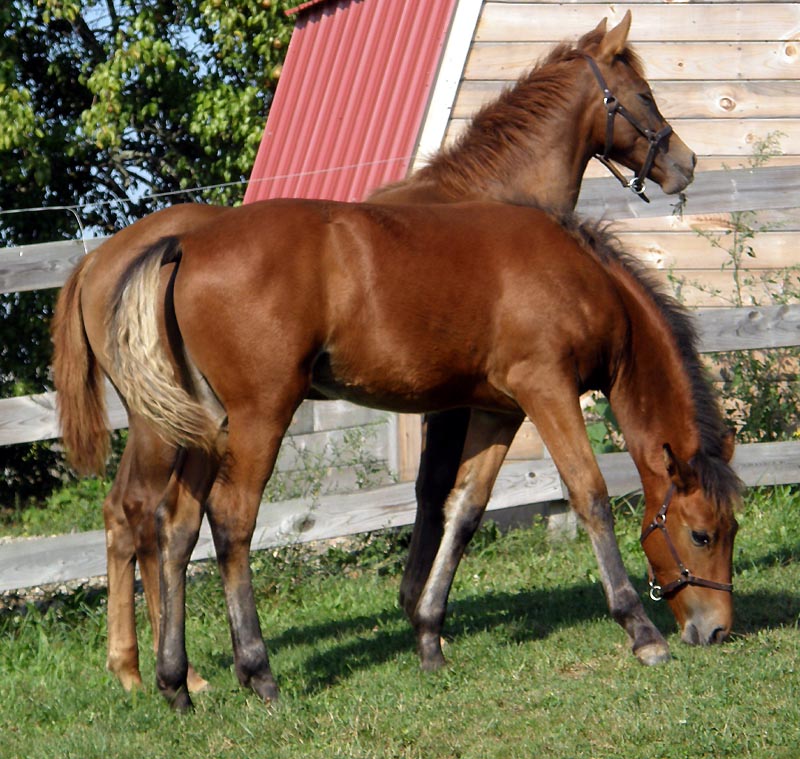 WMS LAUREL ZARA BETH (Robbi-Sue's Sweet Success X WMS Laurel Lady Hanna), 2008 bay mare and her companion WMS LAUREL MADLINE (Delmaytion Top King X SBM Lady Jane), 2008 chestnut mare, both pictured as weanlings. Zara shows a great deal of what is commonly called "foal frosting" in her tail. This eventually grows out in most cases. Sometimes white in that tail is due to rabicano or a pinto pattern. Often the cause of a white hairs in a tail can be determined by the location of the white- at the tailhead is more typical of rabicano, at the sides of the tail in a foal or young horse is more typical of "foal flaxen", and at the bottom of the tail, especially when found in combination with flashy white markings, can be due to a pinto pattern (in Morgans, most likely splash). Photo courtesy of Zara and Madline's breeder, Carol Williams. 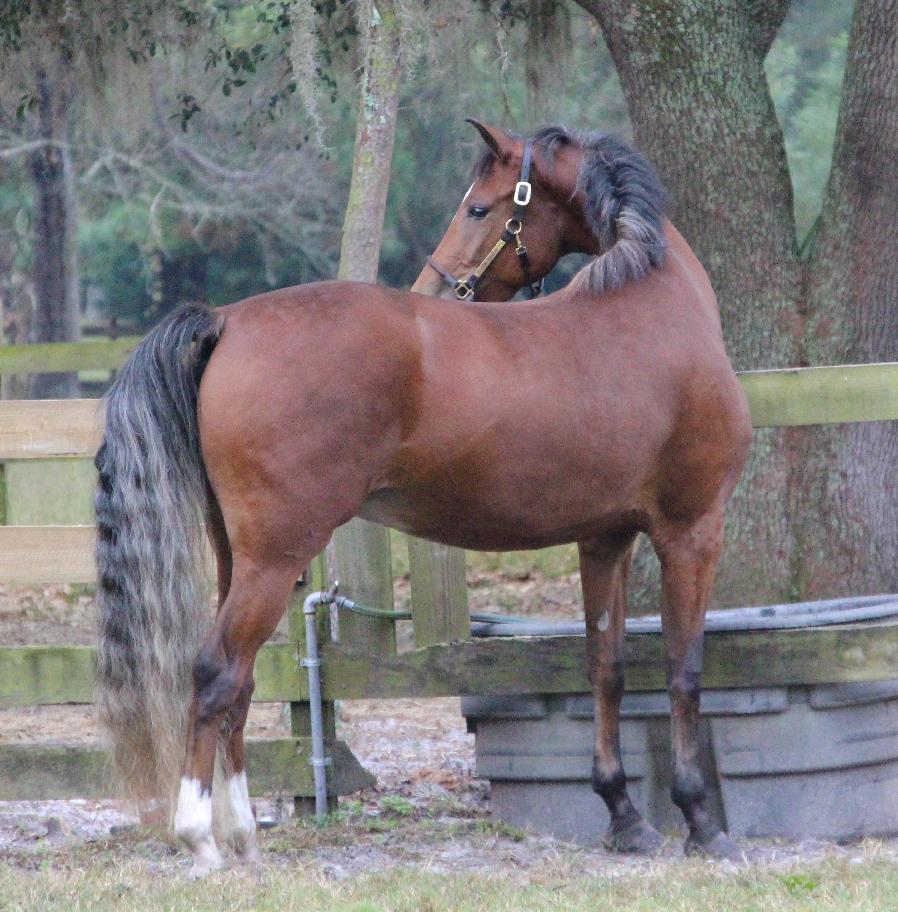 UDM MILANNE (Minion Millenium x Aljaks Miss Whamerica) 2010 bay mare owned by Lindsey Naas. "Milly" has a good deal of light hair in her mane and tail and the not-quite-filled in lower leg points that are associated with wild bay. The Serenity bloodlines behind her sire often throw light or wild bays with this coloring. 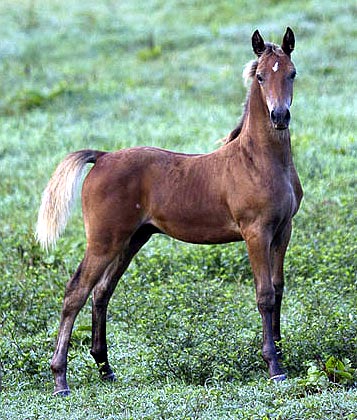
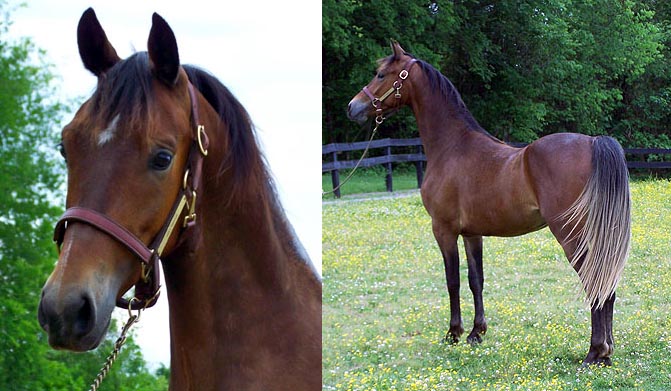 HOLLYBROOK CARTUCCI (Hollybrook Headliner x Hollybrook Georgia Peach), 2010 bay gelding. This lovely gelding is a most interesting color. As a foal he was a very good silver mimic (see our silver page for more info on the silver dilution), but he does not have a silver parent. His coloring is possibly due to wild bay. Wild bays generally have lower, less defined leg points than this. As a two year old (right two pictures), Cartucci's mane has darkened to the more usual black. His tail may retain some light hair or it may, eventually, grow out to be entirely black. You can see a similarly colored Morgan on our sabino page, the mare Unraveled, though her tail is more white than the silvery-gray seen here. Since there is no test available for wild bay, and only one type of sabino, and no test for many yet-to-be-identified genes that may be responsible for some of the unique colors we come across, we can only guess at the cause of some of them. Cartucci is owned by Judy and Harry Leneau. 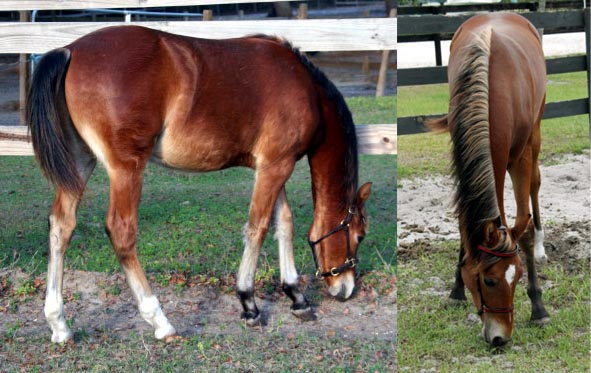 UDM AMERICAN MADE (UDM Gold Mine x Aljak's Miss Whamerica), 2008 bay colt (pictured as a weanling on the left and as a yearling on the right) owned by Upson Downs Morgans. This colt looked very much like a silver bay foal at birth, but he does not have a silver parent so he cannot be silver. The lighter frosting in his mane is not uncommon in wild bays, especially in combination with pangare (the lighter areas on the belly, flanks, and muzzle- also called mealy). His leg points have developed a bit more as he has grown. Photos courtesy of Karen Burridge. 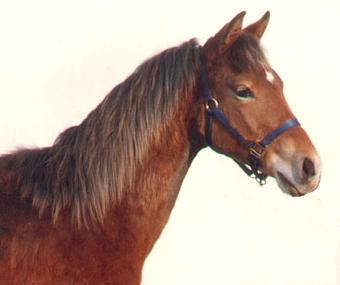
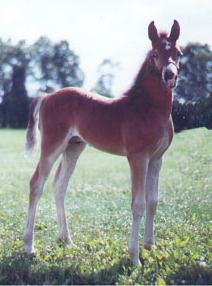
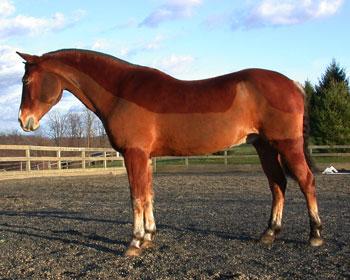
All three photos are of the 1998 bay gelding BLYTHEWOOD BEAU BRUMMEL (Equinox Beaubrook X Coreen Ashmore), owned by Pat Thrasher. Beau is particularly interesting because his washed out points, including the mixed silver-gray mane and tail, make him a very good mimic of a silver dapple bay. His sire is a brown, so cannot be hiding a silver dapple gene; his dam is flaxen chestnut, and while silver dapple does not "show" on chestnuts, she is from the very prolific breeding program of Frances Bryant, based on Jubilee King and Lippitt lines. If silver dapple was "hiding" in the chestnuts from these lines (and many similarly bred horses have been bred by the Quietude Stud, as well), it is likely we'd have seen it by now. Photos courtesy of Kathy Newcomb.  BUSH CREEK TRILLIUM (Mainframe, chestnut X FCF Escapade, bay), 2005 bay filly (pictured as a weanling). This filly's sire has produced several foals with the lighter wild bay phenotype, such as 2005 stallion, Warlock's Eminent Domain. Wild bay is fairly unusual in our Morgan gene pool. If you have a wild bay Morgan, we'd love to feature it on this site! Email Laura Behning with your picture(s). Photo courtesy of Doug Sluiter. 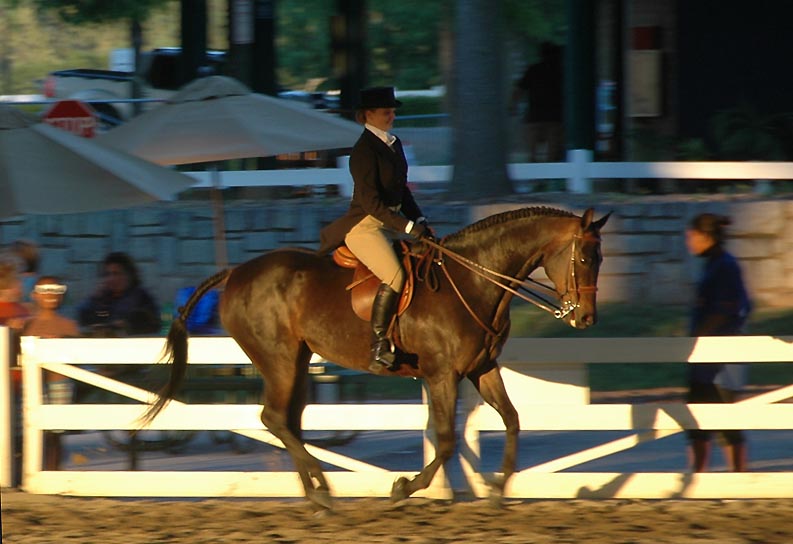
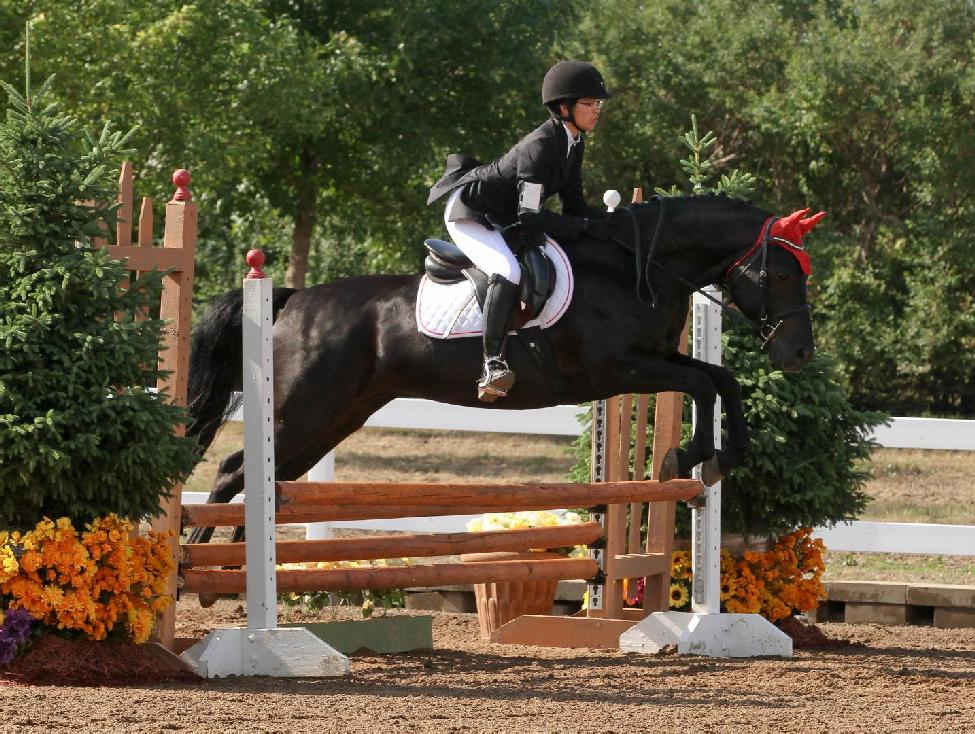
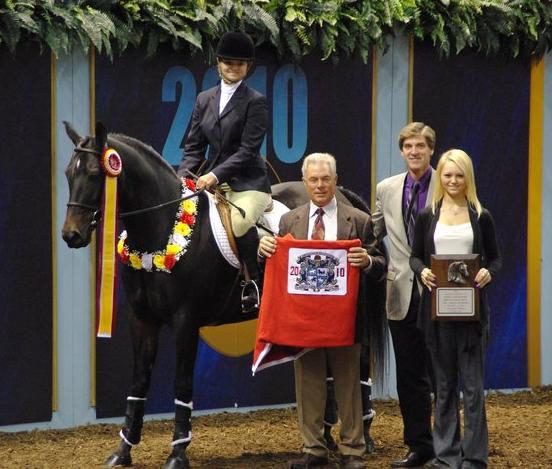 REVERENCE ASTARTE (Sharthunder x Mortana Racquel) 1996 brown mare owned by Nicole Patterson. Pictured at the 2010 Dixie Cup (photo by Laura Behning) and winning Reserve World Champion Jumper at the 2010 Morgan World Championship Show. 
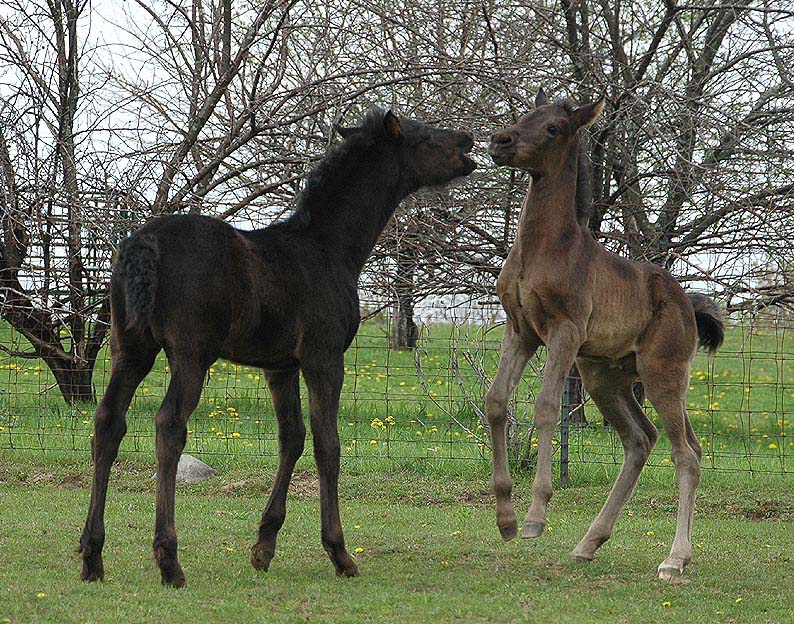
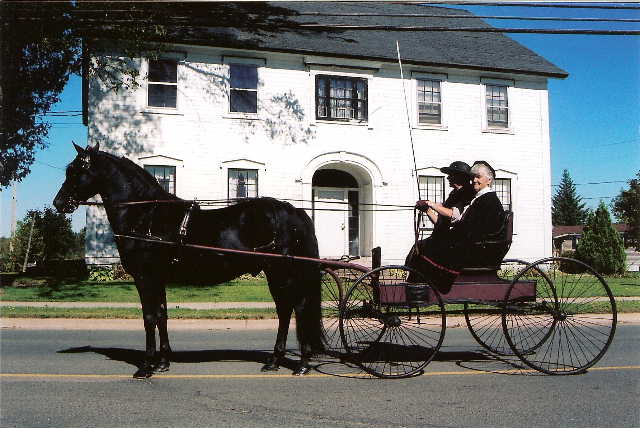
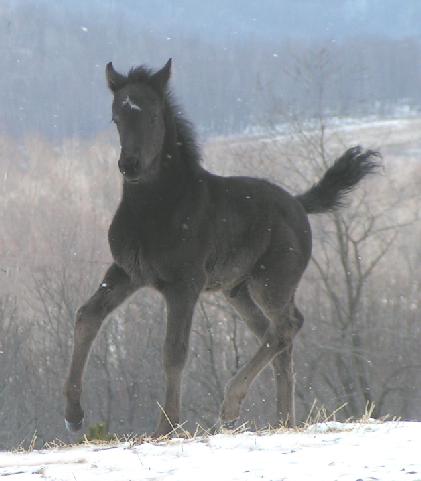
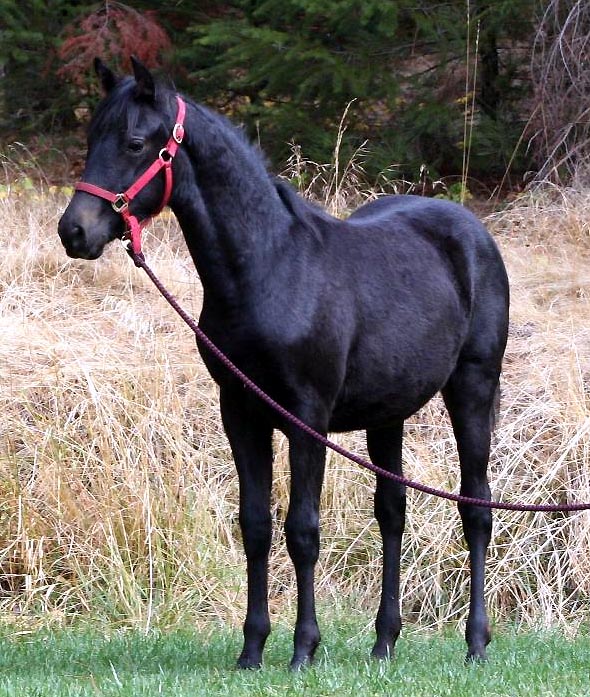 DREAM CATCHER DARK SKYE (The Scandinavian x SA Danielle), 2006 brown mare, pictured on the left at 5 days old and on the right as a weanling. Skye shows how many brown Morgans have been misregistered as black over the years! Only the barest hint of tan on her muzzle- and a test for Agouti! - showed she is not black. Photos courtesy of Barbara Fink. 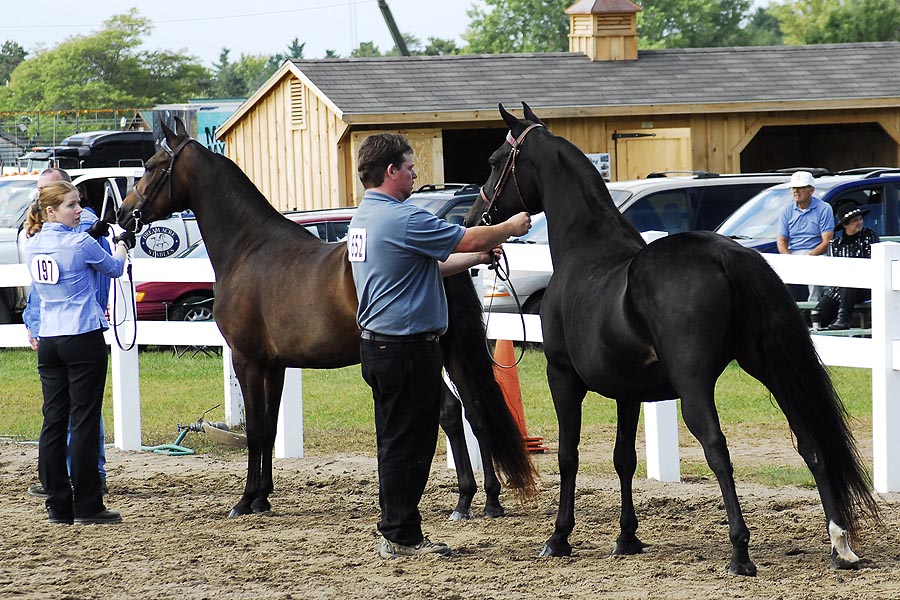 BOBCAT'S WONDERFUL TONITE (Denlore's Desert Storm X Courtland Charisma), 2004 dark bay or brown mare (left) with her owner Catherine LaBarre and COURTLAND CHARISMA (UVM Elite X Disco Dolly), 1990 brown mare with Bob Armstrong. Charisma (aka "Tootsie") was thought to be black, but Agouti testing showed her to have one Agouti gene. Black horses cannot have the dominant, "A" form of Agouti or they would be bay or brown. Many brown horses are mistaken for blacks, and often Agouti testing is the only way to sort them out. Photo by Denlore Photography. 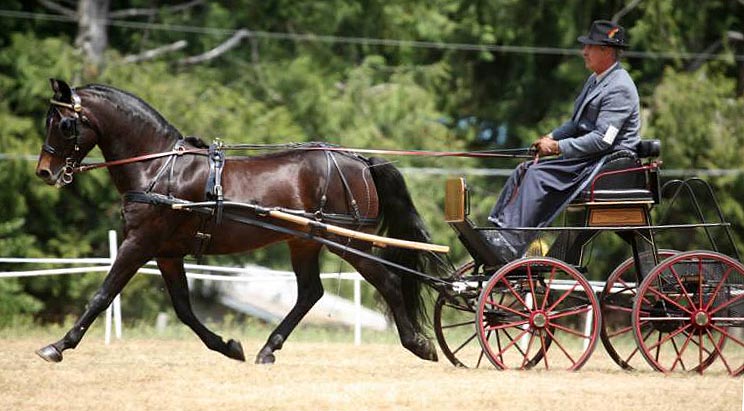 OKAN STORM KING (Meredith Billirubin X Good News Priscilla), 1997 brown stallion owned by Don & Mary Curtis, Okan Morgans. Photo by Tim O'Neal. 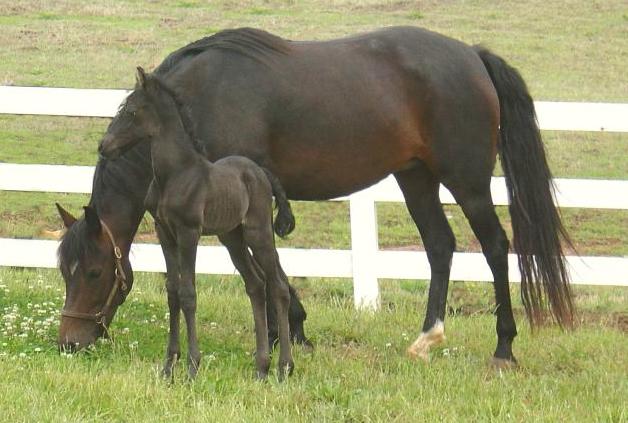 TELISHAN REJOICE (Telishan Santiam X LCS Fine Crystal), 1999 dark bay or brown mare with her 2005 black colt CASTLERIDGE ABOVE, by Above Command. "Joy" is so dark that she might be called brown by some; this "gray area" in defining dark bay vs. brown has led some registries (for example, the Jockey Club) to simply list "dark bay/brown" as a color choice on their registration applications. Photo courtesy of Abe's breeder, Debi Boies. 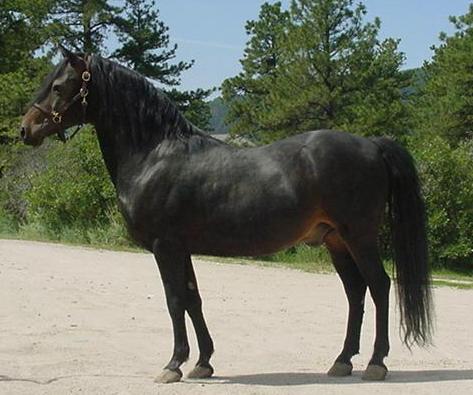 The late TASHOTA'S WARRIOR (Serendipity Storm B X Cambridge Velvetrose), 1984 brown stallion owned by Marilyn Esteb, Stone Pine Farm. Photo by Laura Behning. Rabicano and Roan | Frame | Flaxen | Oddities | Historic Colorful Morgans | Links |

|
Laura Behning | 75 Glass Spring Rd.| Covington, GA 30014 | 770-385-1240 | morgans@mindspring.com |
©Copyright 1995-2021
Website Design by All Night Studio No part of this website may be reproduced without permission. |